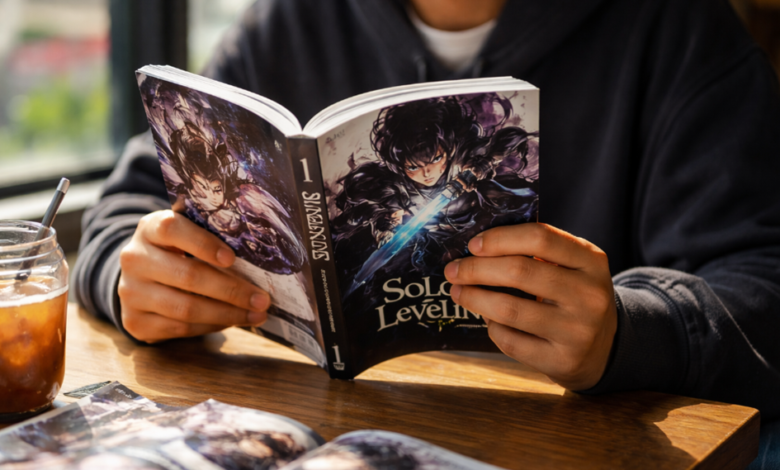
Solo Leveling is a name that echoes through the anime and manga community like the sound of blades clashing in the dark. Known for its visually stunning battles, high-stakes narrative, and the overwhelming rise of its protagonist, it’s no wonder this series has caught the attention of fans and concerned viewers alike. But one question continues to pierce through fan forums and Google searches: is Solo Leveling violent? Whether you’re a parent double-checking if the series is suitable for your teen, or simply a reader curious about what kind of content awaits, you’ve landed in the right place. This article breaks down the intensity of the series without sugar-coating offering a comprehensive view of what kind of graphic content Solo Leveling contains, how it compares to similar works, and whether it truly earns its reputation for being brutal. Grab your hunter licence it’s time to explore the battlefield.
How intense is the violence in Solo Leveling?
The violence in Solo Leveling isn’t just aesthetic it plays a fundamental role in building the atmosphere, the stakes, and the internal evolution of the main character, Sung Jin-Woo. Battles are frequent, explosive, and often end in bloodshed. From torn limbs to beheaded monsters, there’s a clear creative choice to push the limits of graphic intensity in a way that feels both cinematic and deliberate. It’s in these moments that the series earns its mature rating. The action isn’t senseless or random. Instead, it reflects a world where survival is a daily fight, and the brutality is more than visual it’s emotional. Readers watch Jin-Woo carve his way through dungeons not just with his weapons but with cold, focused determination.
In the first few volumes, the series sets the tone quickly: this is not a world where heroes survive unscathed. The early chapters include scenes of adventurers being slaughtered, betrayed, and left behind. It doesn’t shy away from depicting loss or showing bodies post-battle. That said, while the content is violent, it’s not needlessly gratuitous. There’s a clear narrative reason behind the blood. And for collectors or fans who appreciate the visual aspect of the series, there’s even more to enjoy with stunning merchandise like these Solo Leveling figures that bring the intensity of each fight to life.
See also: Agri Drones: Revolutionizing Crop Spraying with Precision Technology
Is Solo Leveling suitable for teenagers?
This is one of the most commonly asked questions by both new readers and concerned parents. The official age rating across various platforms places Solo Leveling in the 16+ or 18+ category, depending on the region. This is largely due to the violence, dark themes, and occasional graphic imagery. However, it’s worth noting that Solo Leveling doesn’t include sexual content or drug use which makes its mature rating primarily focused on action and gore. The themes of death, betrayal, and corruption do run deep, and while they’re handled with narrative maturity, they can be intense for younger readers.
The story also deals with psychological transformation. Jin-Woo’s shift from “the weakest hunter” to an unstoppable force is not without cost. He becomes colder, more calculated, and begins to distance himself emotionally something younger audiences might not fully grasp, or might interpret differently without proper context. If you’re shopping for manga or merchandise for a teen and wondering about suitability, consider visiting a trusted anime shop that clearly labels product age ratings and offers guidance.
How does the violence in Solo Leveling compare to other anime or manga?
When compared to other popular shonen or seinen series, Solo Leveling sits comfortably on the higher end of the violence spectrum. It isn’t quite as gory as Berserk, nor as psychologically disturbing as Tokyo Ghoul, but it does go beyond the action levels of Naruto or My Hero Academia. There’s a cinematic realism to the combat. Blood flows during every dungeon raid. Enemies don’t just fall over they’re obliterated. At times, the fights feel like watching a storm unravel, with every punch and blade strike leaving a trail of damage. Some of the most memorable panels are drenched in blood and shadow creating a visual language of destruction.
Gore vs. Grit: What kind of violence is it?
It’s not the type of violence that shocks in Solo Leveling, but the frequency and scale. You’ll see bodies split in half, enemies turned to ash, and allies fall in battle. But it’s rarely done for shock value. Think of it more as a necessary sacrifice on the battlefield the kind of moment that reveals character, not just carnage.
Does the anime adaptation tone it down?
Interestingly, the anime version (as of early episodes) seems to slightly tone down the gore visually, though the tone remains serious. Shadows still dominate the scenes, and blood is present, but it’s framed more suggestively rather than explicitly perhaps to widen accessibility or comply with broadcasting standards.
What are some of the most violent scenes in Solo Leveling?
Fans often point to several key moments where Solo Leveling cranks the intensity up to eleven. Here are just a few notorious highlights:
- Jin-Woo’s awakening in the double dungeon
- The first Shadow extraction ritual
- The Orc massacre during the early raids
- The Red Gate arc and the Ice Elf battle
- Any of the Monarch vs Monarch fights
Each of these scenes is not just remembered for blood but for emotional weight. The violence isn’t shallow. It tells you something important about the character’s growth, the world’s rules, or the sheer hopelessness of the situation. There are chapters where entire teams are annihilated, and the reader is left staring at torn limbs, blank stares, or puddles of blood. It’s powerful and effective but not for the faint-hearted.
Why does the violence feel justified in Solo Leveling?
There’s a poetic irony in how Solo Leveling uses violence as both weapon and mirror. Every fight reveals something deeper ambition, fear, sacrifice. It’s violence with consequence, not just aesthetics. Jin-Woo’s transformation is forged through blood. As he rises in power, the world gets darker. He doesn’t become a traditional hero. He becomes what the world needs: a hunter who won’t hesitate. Readers follow this change through each battle, and the violence helps track his morality or slow loss of it. Metaphorically, each drop of blood in the series is a toll paid to climb the tower of strength. Like a shadow that grows with every step forward, the violence in Solo Leveling isn’t just visual it’s symbolic. And in that symbolism lies the reason why so many find the violence not just acceptable, but essential.
Final thoughts on whether Solo Leveling is too violent
Solo Leveling walks a sharp edge between brutal storytelling and emotional depth and it does so with remarkable balance. The violence found in its pages isn’t mindless or purely for shock. It’s the ink that sketches the world’s harshness, the fire that forges its protagonist, and the shadow that constantly reminds us of the stakes. For readers seeking a raw, immersive, and intense experience, this series delivers with impact and conviction. Yes, it is violent. But it’s also meaningful. It’s the kind of story that uses blood as a language speaking not only of war and monsters, but of human will, transformation, and the cost of power. Whether you’re a long-time manga fan or a curious newcomer trying to understand what sets Solo Leveling apart, the answer is this: its violence matters because it’s never empty. For some, that level of intensity may be too much. For others, it may be exactly what makes the series unforgettable. So what do you think? Is Solo Leveling’s darkness a flaw, or the very reason for its brilliance? Let the conversation begin.